

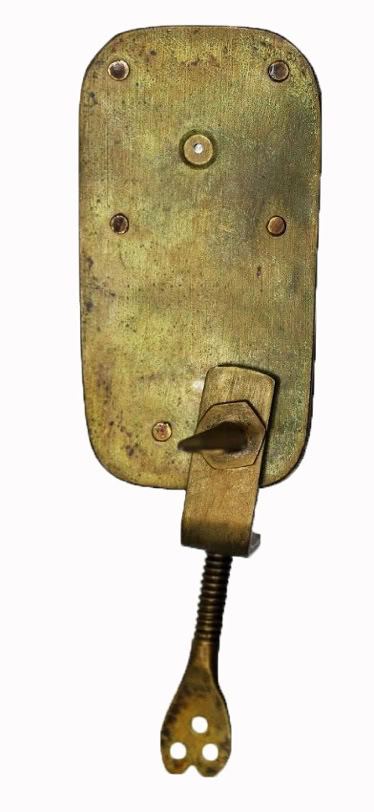
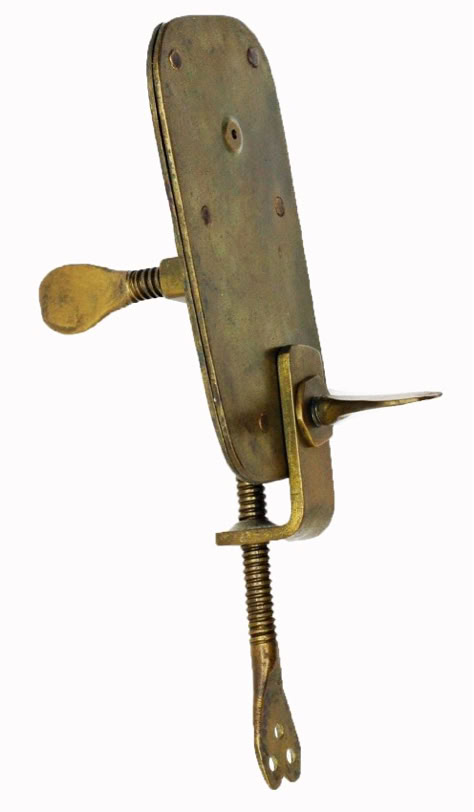

Microscope 462
(replica of an Antoni van Leeuwenhoek microscope, made by Chris Kirby, Hertfordshire, UK)
Microscope 462 is a replica of a single-lens microscope of the type used by Antoni van Leeuwenhoek. It was made in 2010 or 2011 by Chris Kirby, a retired engineer and amateur instrument maker from Hertfordshire, UK. Kirby produced these replicas entirely by hand, using, to a large extent, machinery of his own design and construction. The lenses were made by cutting small discs of glass from sheet glass and shaping them with a grinding wheel to produce convex lenses with an approximate magnification of 100×. The microscope body consists of two brass plates cut to shape using a template. The small depression in which the lens is mounted was pressed into the brass using a homemade press, and the two plates were then joined with handmade brass rivets. The specimen screws were fashioned from brass rod and individually threaded. The main screw was available with either a pierced or solid handle, stamped from brass rod using a Victorian press. Photographs of Chris Kirby and his workshop, together with further information about the manufacture of these replicas, can be found HERE. This design represents the type of single-lens microscope most commonly associated with van Leeuwenhoek and is widely reproduced in books, textbooks and online resources dealing with biology, microbiology and the history of microscopy. Figure 1 shows a drawing of one such instrument, made in 1886 by the English microscopist John Mayall. It was based on an original van Leeuwenhoek microscope then held by the Zoological Laboratory of the University of Utrecht.
Antoni van Leeuwenhoek (1632–1723) was a Dutch microscopist renowned for his pioneering observations of microorganisms. He was the first to describe bacteria and protozoa in detail and is widely regarded as one of the founders of microbiology. His microscopes were based on a simple but highly effective principle: a single, small lens with a very short focal length, capable of achieving high magnification. At the time, such simple microscopes could offer significant optical advantages over compound instruments, which were affected by chromatic aberration and other optical limitations. Van Leeuwenhoek's methods of lens manufacture and microscopy remain incompletely understood. During his lifetime, he made more than 500 lenses, most of them extremely small, often no larger than a pinhead. He generally mounted these lenses between two thin metal plates, usually made of brass or silver, which were riveted together. Examination of surviving lenses has revealed magnifications ranging from approximately 50× to as high as 300×. Van Leeuwenhoek is also known to have made more than 270 microscopes. Many were recorded in the 1747 auction catalogue produced following the death of his daughter Maria, 24 years after his own death, when his remaining lenses and microscopes were put up for sale. Three of the instruments listed were described as being made of gold, while most were made of silver or brass.
The majority of van Leeuwenhoek's original microscopes have since been lost. Only eleven are generally recognised as surviving original instruments, and these are preserved in museum collections, including the Rijksmuseum Boerhaave in Leiden. In addition to the familiar single-lens instruments, van Leeuwenhoek made and used other types of microscopes and viewing devices for examining different specimens, including instruments incorporating two or three lenses and specialised devices for observing eels and fish. Figure 2 shows a selection of replicas of these less familiar instruments, which also form part of this collection.

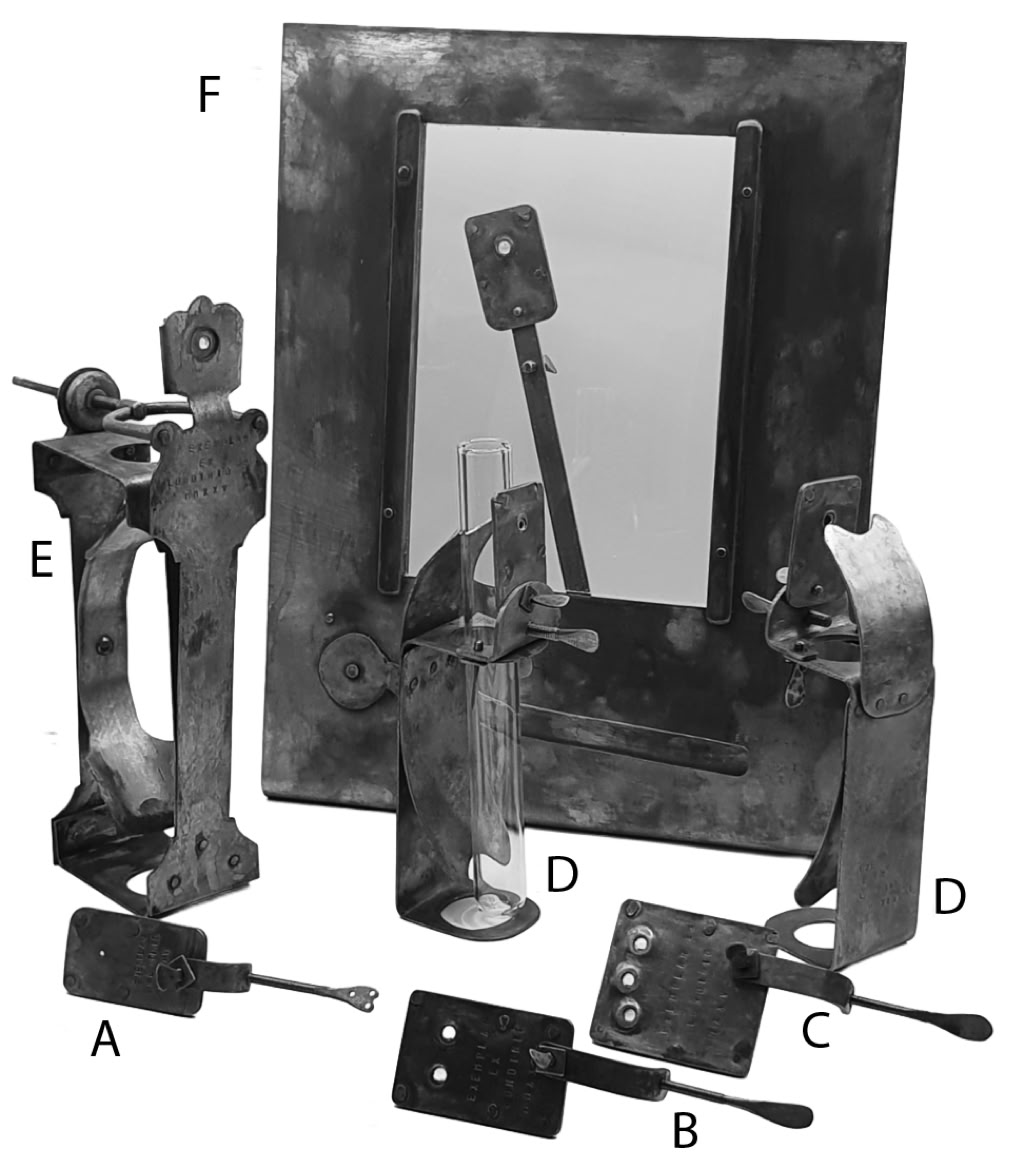
Figure 1. Drawing of an original Van Leeuwenhoek’s microscope (adapted from “Mayall J. 1886. Leeuwenhoek’s Microscopes. Journal of the Royal Microscopical Society 6: 1047 – 1049”).
Figure 2. Replicas of different types of microscopes associated with Antoni van Leeuwenhoek: (A) Standard type of single-lens microscope; (B) Dual lenses microscope; (C) Three-lenses microscope; (D) Aquatic/eel viewer microscope; (E) Eel viewer/showcase for visitors microscope; and (F) Fish viewer microscope.