
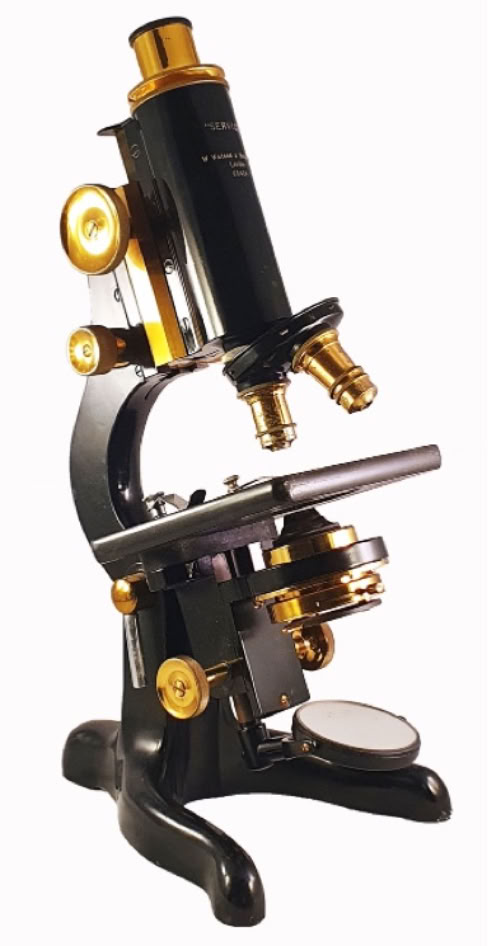
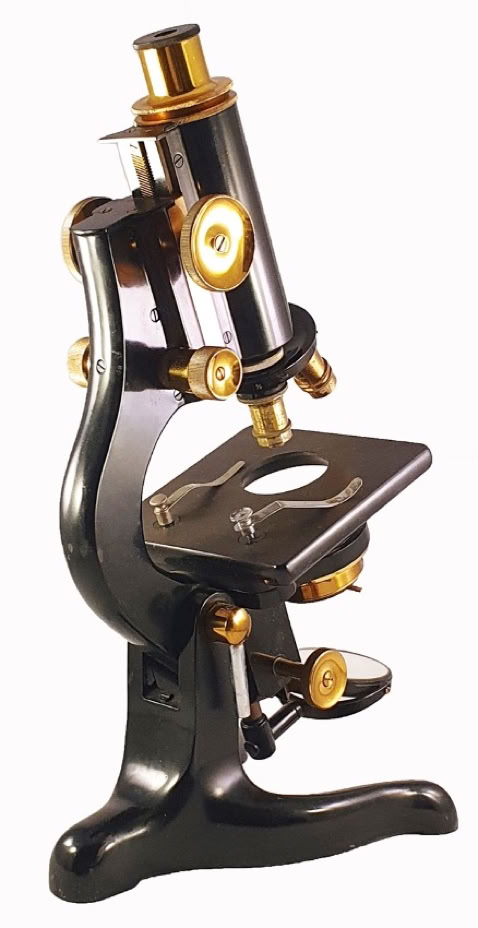
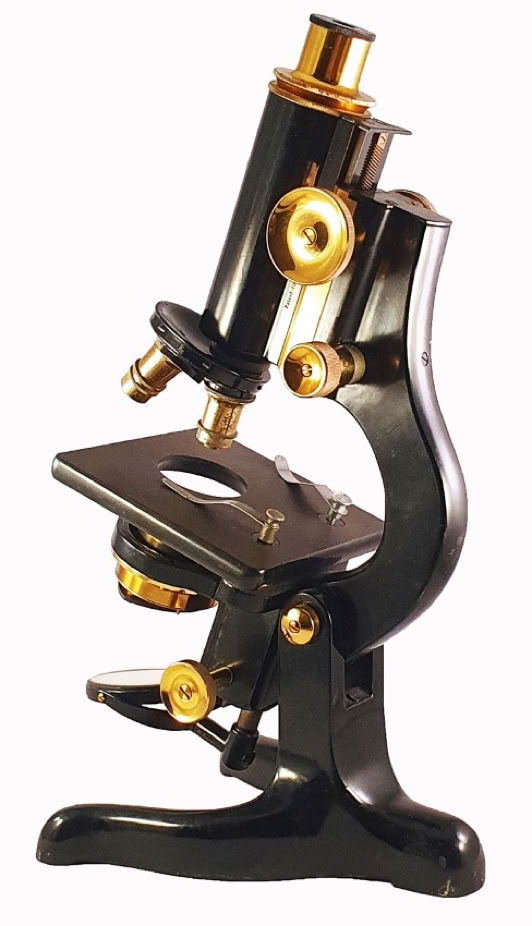
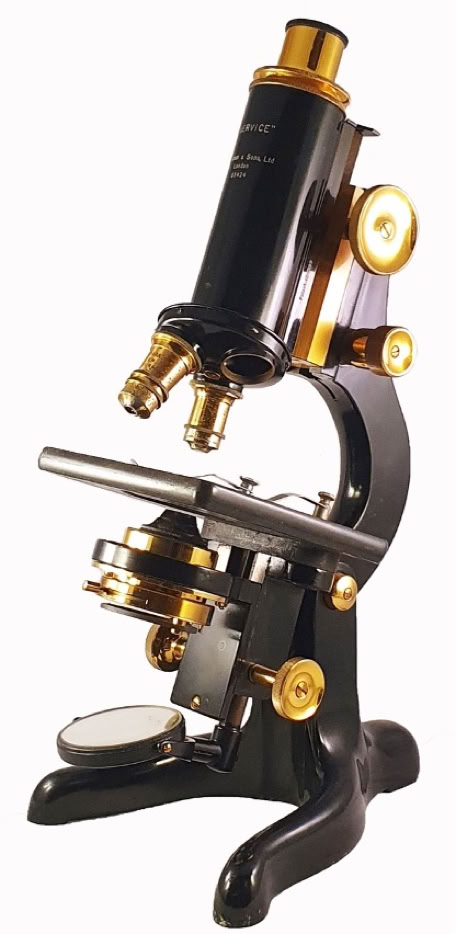
Microscope 296
(W. Watson & Sons; Service microscope; 1937)
W. Watson & Sons was a British firm of opticians and camera makers operating in London and Edinburgh. Founded by William Watson in 1837 at 71 City Road, London, the business remained at this address until 1861, when it moved to 313 High Holborn. The company's name changed to W. Watson & Son in 1867 and to W. Watson & Sons in 1882. In 1900, the firm acquired John Browning & Co., and in 1908 it became W. Watson & Sons Ltd. In the 1929 British Industries Fair Catalogue, the company advertised its optical, scientific and photographic equipment, highlighting microscopes designed for medical, industrial and educational applications. By the 1950s, the firm had relocated to 25 West End Lane, Barnet, Hertfordshire, where it remained until the late 1960s. Pye of Cambridge acquired the company in 1957, and Philips took it over ten years later. Microscope production had ceased by 1970.
Microscope 296 bears the inscriptions ‘Service, W Watson & Sons, Ltd, London’ and ‘Patent 194099’ on its main tube, together with the serial number 63424. A label inside the original wooden case repeats the serial number and records the date 1937, providing a reliable date for the instrument. The Service microscope was described in Watson's 36th catalogue, published around 1930, as an exceptionally efficient, robust and rigid student instrument intended for bacteriology, botany, histology, pathology and zoology (Figure 1). According to the manufacturer, it was among the most widely used microscopes in British universities at the time.
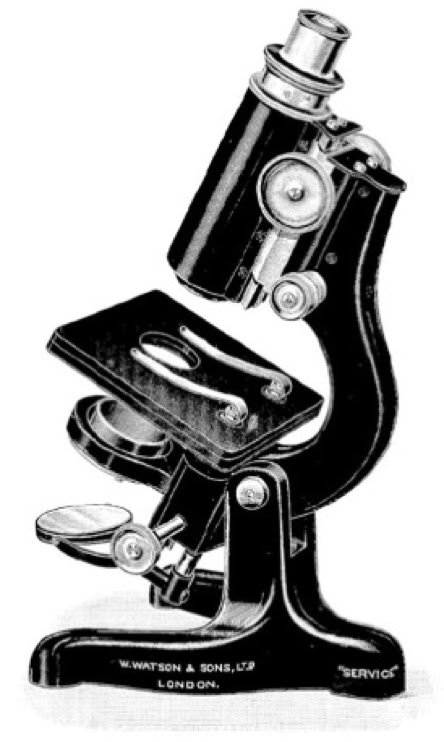
Figure 1. Watson’s Service microscope as engraved in the 1930s 36th edition of the Watson catalogue.