
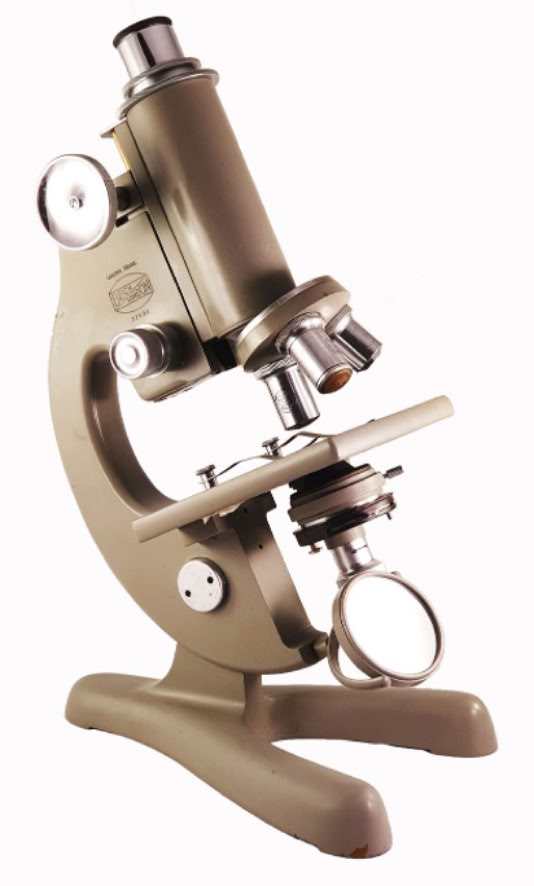
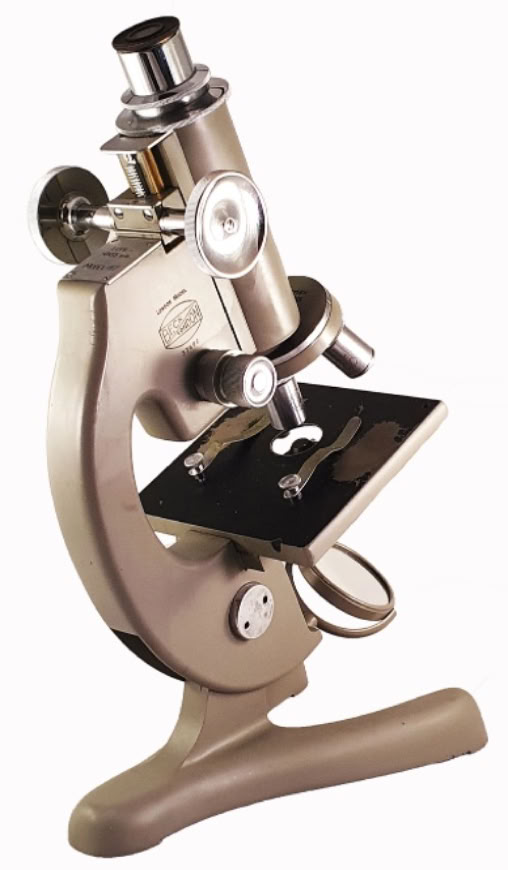
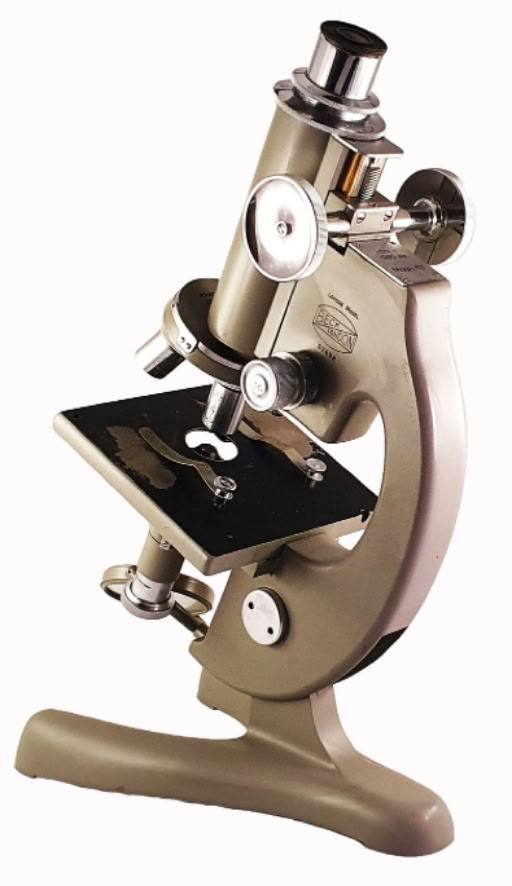

Microscope 216
(R & J Beck; microscope model 47B; 1950s)
R. & J. Beck occupies an important place in the history of British microscope manufacturing. The firm originated in London through the partnership of Richard Beck (1827–1866) and James Smith (1800–1873), and was later joined by Richard’s brother, Joseph Beck. The Beck brothers were nephews of Joseph Jackson Lister, the respected British optician and physicist whose pioneering work on achromatic lenses contributed significantly to the development of the modern optical microscope. In developing his improved microscope, Lister worked with James Smith, then employed by the instrument-making firm of William Tulley, to manufacture the microscope stand. Smith subsequently established his own optical instrument workshop in 1837. Through Lister’s influence, Richard Beck began an apprenticeship with Smith in 1843. In 1847, Smith and Richard Beck entered into partnership, establishing Smith & Beck. The firm was renamed Smith, Beck and Beck in 1854, following Joseph Beck’s admission to the business in 1851. When Smith retired in 1865, the company adopted the name R. & J. Beck, which it retained for many decades. Richard Beck died prematurely in 1866, aged 39, and Joseph continued to manage the business. In 1895, the firm became a limited company under the name R. & J. Beck Ltd. By 1968, it had become a subsidiary of the American Ealing Corporation. In 2019, Beck Optronic Solutions Ltd represented a successor to the historic R. & J. Beck business.
Microscope 216 is a Beck Model 47B, dating from the late 1940s or 1950s (Figure 1).
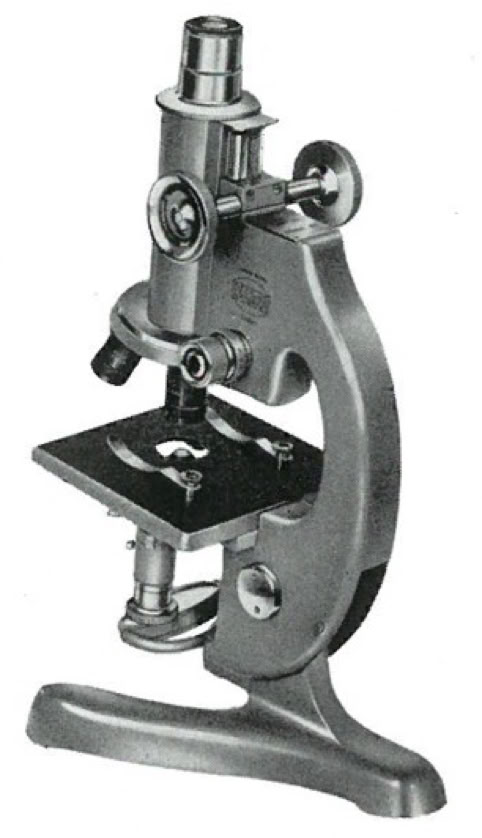
Figure 1. Beck’s microscope model Nº. 47B as featured in a 1962 catalogue of the firm.